

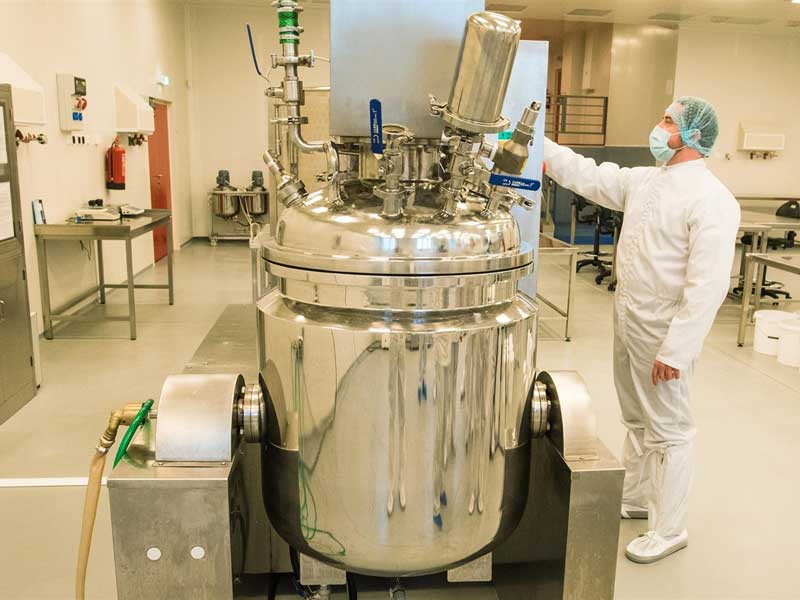
In the competitive global condiments market, mayonnaise stands as a benchmark product where quality, consistency, and texture are paramount. Achieving the perfect balance of creaminess, stability, and flavor is a complex engineering challenge, solved at its core by one essential machine: the industrial mayonnaise emulsifier. This is not merely a mixing device; it is a precision-engineered system that transforms raw ingredients into a homogeneous, shelf-stable, and consumer-pleasing emulsion. For manufacturers targeting leadership, investing in advanced emulsification technology is the definitive step toward superior product quality, operational efficiency, and market differentiation.
The Technical Imperative: The Science Behind a Stable Emulsion
Commercial mayonnaise is a concentrated oil-in-water emulsion, typically containing 70-80% oil. The primary challenge is to permanently disperse this high volume of oil into microscopic droplets (typically 2-10 microns) within a continuous aqueous phase containing egg yolk, vinegar, and seasonings. This requires overcoming significant interfacial tension through the application of intense, controlled mechanical energy. Inadequate emulsification technology leads directly to product failures that impact the bottom line:
- Phase Separation (Syneresis): Oil and water layers visibly split, rendering the product unsaleable and damaging brand trust.
- Coarse Texture & Inconsistency: Large, uneven oil globules create a grainy, unpalatable mouthfeel and visual defects.
- Limited Shelf Life & Oxidation: Unstable emulsions are prone to microbial spoilage and oxidative rancidity, shortening product life.
- Production Inefficiency: Extended processing times, high energy consumption, and batch failures increase operational costs and limit throughput.
Core Technologies of a High-Performance Mayonnaise Emulsifier
Modern mayonnaise production lines rely on emulsifiers that integrate several key technologies to ensure consistent, high-quality output:
-
High-Shear Homogenization: The fundamental process. A high-speed rotor-stator generator or similar shear head applies intense mechanical and hydraulic shear forces. This rapidly breaks down oil droplets to the target micron size, creating the foundational smooth, thick texture and ensuring long-term physical stability by preventing droplet coalescence.
-
Vacuum Emulsification: A critical feature for premium quality and extended shelf life. By operating the shear mechanism within a sealed vacuum chamber, entrapped air is removed during processing. This eliminates air bubbles (preventing a “spongy” texture), inhibits oxidation of oils (delaying rancidity), and produces a denser, glossier, and more spreadable final product.
-
Precise Temperature Management: Jacketed vessels with accurate heating and cooling controls are essential. They allow operators to manage the emulsion temperature precisely, which is crucial for optimizing viscosity, ensuring proper functionality of emulsifiers (like egg lecithin), and enabling rapid cooling to “set” the final product structure.
-
Programmable Automation & Scalability: From R&D-scale units (5-50L) for recipe development to fully automated continuous production lines, programmable logic controllers (PLCs) ensure precise control over shear rate, vacuum level, temperature, and sequence. This guarantees perfect batch-to-batch reproducibility and allows for seamless scaling from pilot to full production.
Strategic Business Advantages: The ROI of Advanced Technology
Investing in a state-of-the-art mayonnaise emulsifier delivers a compelling return on investment across multiple business dimensions:
- Unmatched Product Quality & Consistency: Produce mayonnaise with a consistently luxurious, creamy texture, superior spreadability, and exceptional stability that resists separation for months, commanding a premium market position.
- Maximized Production Efficiency & Throughput: Achieve the target emulsion in minutes rather than the hours required by traditional slow-speed agitators. This dramatically increases production capacity, reduces energy consumption per ton, and lowers overall manufacturing costs.
- Enhanced Formulation Flexibility & Innovation: The robust technology enables the successful production of diverse varieties, including low-fat, egg-free, organic, vegan, or flavored (e.g., chipotle, garlic) mayonnaises, allowing rapid response to consumer trends.
- Reduced Waste & Improved Profitability: Minimize product giveaway, rework, and recall risks through unparalleled batch consistency. The extended shelf life reduces logistical pressure and waste throughout the supply chain.
- Hygienic Design & Regulatory Compliance: Modern emulsifiers are constructed with food-grade stainless steel (SUS 304/316L), feature polished surfaces, and are designed for easy cleaning (CIP/SIP), supporting compliance with stringent global food safety standards (FDA, EU, GMP, etc.).
Selecting the Right Technology Partner: Key Considerations
Choosing an emulsifier requires a strategic assessment aligned with your production goals:
- Batch vs. Continuous Processing: Determine which model (batch vacuum emulsifier vs. inline continuous homogenizer) best suits your output volume and production philosophy.
- Capacity & Viscosity Range: Match the machine’s specifications to your target batch sizes and the viscosity of your thickest formulations.
- Level of Automation: Consider the integration with upstream (ingredient feeding) and downstream (filling/packaging) systems for a seamless production line.
- Supplier Credibility & Support: Partner with a manufacturer with proven expertise in food processing, offering comprehensive technical support, process validation services (like lab trials), and reliable after-sales service.