

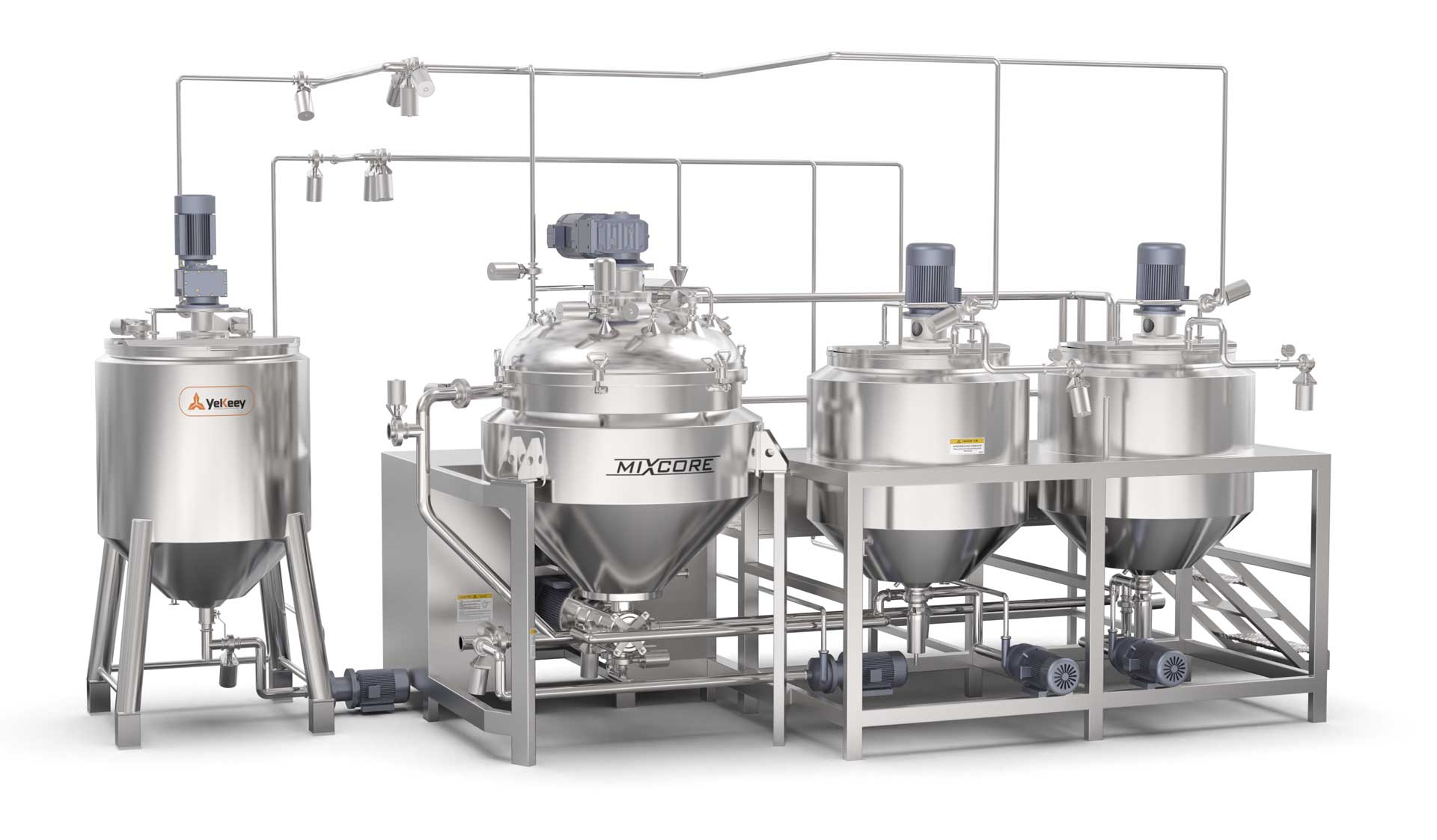
In the global condiment market, mayonnaise stands as a staple with fiercely competitive quality standards. The difference between a generic product and a market-leading brand often boils down to one piece of equipment: the industrial mayonnaise emulsifier. This machine is not just a mixer; it is the core technology responsible for transforming simple ingredients—oil, eggs, vinegar, and spices—into a consistently creamy, stable, and delicious emulsion. For manufacturers aiming to excel, understanding and investing in advanced emulsification technology is the key to unlocking superior product quality, operational efficiency, and brand reputation.
Deconstructing the Perfect Emulsion: The Technical Challenge
At its heart, mayonnaise is a concentrated oil-in-water emulsion. Achieving its signature thick, spoonable texture and long shelf stability requires the uniform dispersion of a high volume of oil into tiny, micron-sized droplets within a continuous aqueous phase. This process demands precise control over shear force, temperature, and ingredient incorporation. Traditional low-shear agitators or basic colloid mills often struggle with this task, leading to common and costly production issues:
- Emulsion Breakdown (Syneresis): The separation of oil and water, resulting in an unappealing, watery layer.
- Coarse Texture & Inconsistency: Large, uneven oil globules create a grainy mouthfeel and visual imperfections.
- Limited Shelf Life: Unstable emulsions are prone to oxidation and microbial spoilage.
- High Waste & Inefficiency: Extended processing times, batch failures, and product rework erode profitability.
Advanced Emulsifier Technology: The Solution for Modern Production
Modern mayonnaise emulsifiers are engineered to overcome these challenges through integrated systems that provide controlled, high-intensity processing. The most effective systems combine several key technologies:
-
High-Shear Homogenization: The fundamental mechanism. Using a high-speed rotor-stator generator or similar shear head, the machine applies intense mechanical and hydraulic forces. This instantly breaks down oil droplets to a target size of 2-10 microns, creating the foundational smooth and stable texture.
-
Vacuum Emulsification: A critical feature for premium quality. By operating the shear mechanism within a sealed vacuum chamber, air is removed from the mixture during processing. This eliminates unwanted air bubbles (which cause a “spongy” texture and oxidation), yields a denser, glossier product, and significantly extends shelf life by preventing oil rancidity.
-
Precise Thermal Management: Jacketed vessels with accurate heating and cooling allow operators to control the emulsion temperature meticulously. This is vital for optimizing viscosity, ensuring ingredient functionality (like egg protein denaturation), and achieving rapid cooling to “set” the final structure.
-
Programmable Automation & Scalability: From pilot-scale R&D units (5-50L) to full industrial lines, programmable logic controllers (PLCs) ensure recipe accuracy and repeatability. This allows for flawless scaling from development to high-volume production, guaranteeing every batch matches the gold standard.
The Strategic Advantages for Your Business
Investing in a state-of-the-art mayonnaise emulsifier delivers a clear return on investment across multiple fronts:
- Uncompromising Product Quality: Produce mayonnaise with a consistently luxurious, creamy texture, superior stability (resisting separation for months), and enhanced flavor clarity that commands a premium price point.
- Maximized Production Efficiency: Drastically reduce processing cycles compared to traditional methods. Achieve the target emulsion in minutes rather than hours, increasing throughput and reducing energy consumption per ton.
- Formula Innovation & Flexibility: The robust technology enables the successful production of diverse varieties, including low-fat, egg-free, organic, or flavored mayonnaises, allowing you to respond quickly to market trends.
- Enhanced Profitability: Minimize product waste and recall risks through unparalleled batch consistency. The extended shelf life reduces logistical pressure and opens doors to broader distribution channels.
- Hygienic Design & Compliance: Modern emulsifiers are constructed with food-grade stainless steel (SUS 304/316L) and designed for easy cleaning (CIP/SIP), supporting compliance with stringent global food safety standards (FDA, CE, etc.).
Choosing Your Technology Partner
Selecting the right emulsifier requires matching the machine’s capabilities to your specific production goals. Key considerations include:
- Batch vs. Continuous Processing: Determine which flow model suits your output volume.
- Viscosity Range: Ensure the machine can handle your thickest target formulations.
- Hygiene & Automation Level: Align with your facility’s sanitation protocols and operational staffing.
- Supplier Expertise & Support: Partner with a manufacturer that offers robust application knowledge, comprehensive after-sales service, and preferably, the opportunity for lab trials with your own recipe.