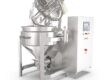


The quest for the perfect cream, serum, or lotion is a pursuit of sensory alchemy. At the intersection of science and consumer delight lies a critical, often unseen, piece of technology: the industrial cosmetic emulsifier. Far beyond simple mixing, this sophisticated equipment is the architect of a product’s fundamental structure—its emulsion. For brands and manufacturers committed to excellence, innovation, and market leadership, understanding and investing in advanced emulsification technology is not an operational detail; it is a core strategic imperative.
The Precision Challenge: Creating Stability from Immiscibility
Cosmetic formulations are delicate ecosystems where oil and water phases, active ingredients, and functional additives must coexist in perfect, lasting harmony. The process of emulsification—creating a stable, homogeneous blend—is governed by complex physicochemical principles. Inadequate technology fails to provide the necessary energy input and control, leading directly to product flaws that erode consumer trust and brand value:
- Physical Instability: Phase separation, creaming, or sedimentation, rendering the product unsaleable and visually unappealing.
- Subpar Sensory Experience: A formulation that feels heavy, greasy, tacky, or uneven fails the critical “first touch” test, regardless of its active ingredient profile.
- Compromised Efficacy: Poor dispersion and droplet size control can trap expensive actives, drastically reducing their bioavailability and clinical performance on the skin.
- Accelerated Degradation: An unstable emulsion structure offers less protection, leading to the rapid oxidation of sensitive ingredients like vitamins, retinoids, and botanical extracts, shortening shelf life.
The Engine of Creation: Core Technologies of a Modern Emulsifier
Today’s leading emulsifiers are integrated systems designed to deliver flawless, reproducible results:
-
High-Shear Homogenization: The fundamental mechanism. A high-speed rotor-stator generator creates intense mechanical and hydraulic shear forces, reducing oil droplets and solid particles to a uniform, sub-micron size (typically 1-5 microns). This precise droplet size distribution is the bedrock of a stable, elegant, and smooth-textured emulsion.
-
Vacuum Emulsification: A critical differentiator for premium products. Processing under vacuum removes entrapped air during homogenization. This eliminates microbubbles for a denser, richer texture, prevents oxidation of delicate ingredients (preserving potency, color, and fragrance), and significantly extends product shelf life.
-
Precise Thermal Management: A jacketed vessel with accurate heating and cooling controls allows for staged temperature processing. This enables the controlled melting of waxes, safe incorporation of heat-sensitive actives (e.g., enzymes, probiotics), and rapid cooling to “set” the emulsion’s microstructure, locking in the desired viscosity and stability.
-
Versatility for Complex Systems: Modern systems are engineered to master the full spectrum of cosmetic rheology—from fluid essences and micellar waters to thick balms and pigmented foundations. They excel at dispersing powders (TiO2, ZnO, pigments), homogenizing pre-formed liposomes, and uniformly distributing sensitive particles without degradation.
The Strategic ROI: Business Advantages of Advanced Technology
Investing in a state-of-the-art emulsifier delivers a compelling return that extends far beyond the production floor:
- Accelerated Innovation & R&D Agility: Unlock the ability to develop and scale novel, market-leading formulations that were previously impossible, such as water-in-silicone gels, oil-free serums, and stable natural/organic products with challenging matrices.
- Guaranteed Quality & Brand Protection: Achieve absolute batch-to-batch consistency. Every unit meets exact sensory and performance specifications, safeguarding brand reputation and eliminating costly quality deviations and recalls.
- Maximized Production Efficiency & Sustainability: Drastically reduce processing times from hours to minutes, increasing throughput and lowering energy consumption per batch. Precise control minimizes raw material waste and product loss, supporting more sustainable manufacturing practices.
- Enhanced Supply Chain Resilience: Products with superior physical and chemical stability boast longer shelf lives, reducing waste in the distribution channel and providing greater flexibility for global logistics.
- Superior Consumer Experience & Loyalty: Deliver consistently luxurious textures—lightweight, fast-absorbing, non-greasy—that create memorable sensory experiences and drive repeat purchases.
Selecting Your Technology Partner: A Framework for Decision-Making
Choosing an emulsifier is a significant capital investment. A strategic evaluation should focus on:
- Technical Scalability & Fidelity: Does the supplier offer a compatible equipment range from lab-scale (for R&D and small batches) to full GMP production, ensuring seamless and reliable scale-up?
- Hygienic Design & Regulatory Compliance: Construction must be in 316L or higher-grade stainless steel, with electropolished surfaces, sanitary fittings, and validated Clean-in-Place (CIP) / Sterilize-in-Place (SIP) capabilities to meet global standards (FDA, EU GMP, ISO 22716).
- Process Intelligence & Support: Partner with a manufacturer that provides deep application expertise, assists with critical process parameter (CPP) optimization for your specific formulations, and offers comprehensive global service and support.
- Validation through Application Trials: Insist on the opportunity to test your specific formulations. Measurable data on droplet size distribution, viscosity, and accelerated stability are essential for de-risking the investment.