

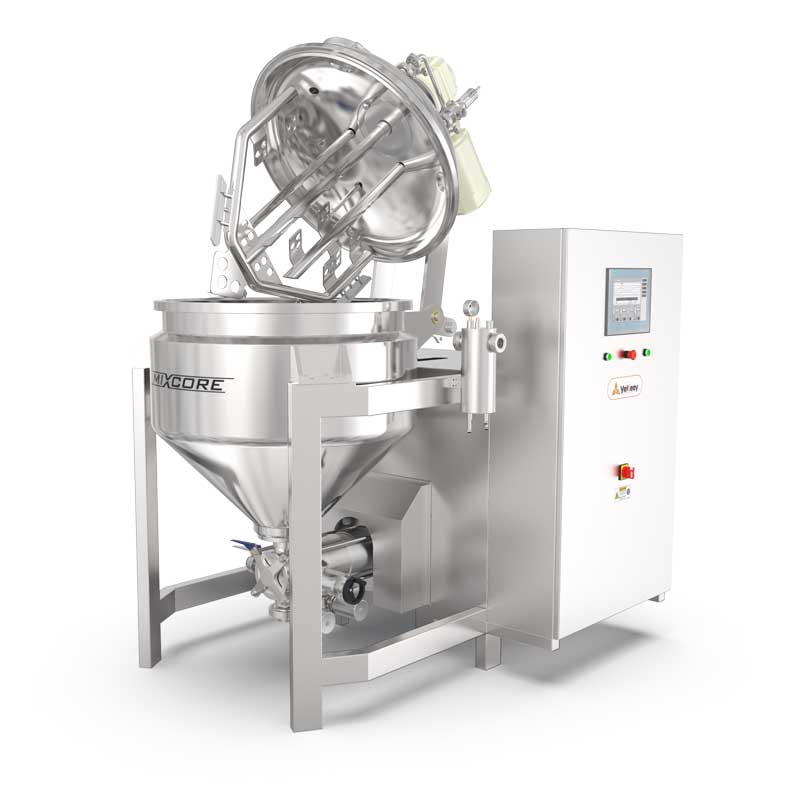
In the global condiment industry, mayonnaise is a product where texture, stability, and taste are non-negotiable. The difference between a mediocre product and a market-leading brand is often engineered in one crucial piece of equipment: the mayonnaise emulsifier. This specialized machinery is the cornerstone of modern food processing, transforming basic ingredients into a consistent, high-quality emulsion. For manufacturers aiming to optimize production, ensure product excellence, and stay ahead of consumer trends, understanding and leveraging advanced emulsification technology is a fundamental business strategy.
The Core Challenge: Achieving Stability in a High-Fat System
Mayonnaise is a classic oil-in-water emulsion, typically containing 70-80% vegetable oil suspended in a water-based phase with egg yolk, vinegar, and spices. The primary technical hurdle is to create and maintain an extremely fine dispersion of oil droplets (ideally 2-5 microns) to prevent phase separation. This requires precise control over shear energy, temperature, and ingredient incorporation. Inadequate technology leads to predictable and costly failures:
- Emulsion Breakdown: Visible oil or water separation (syneresis) shortly after production.
- Poor Texture & Mouthfeel: A coarse, greasy, or uneven consistency that fails consumer sensory tests.
- Limited Shelf Life: Physical instability accelerates oxidation and microbial growth.
- Production Inefficiency: Long processing times, high energy use, and significant product waste from batch inconsistencies.
Technology in Action: The Components of a High-Performance Emulsifier
Modern mayonnaise production relies on emulsifiers that integrate several advanced systems:
-
High-Shear Homogenization Unit: The heart of the machine. A high-speed rotor-stator generator applies intense mechanical shear, breaking down oil droplets to the micron level and creating a stable, creamy base. The shear rate and energy input are critical parameters for final texture.
-
Vacuum Emulsification Chamber: A key feature for premium quality. Processing under vacuum removes entrapped air, preventing oxidation (which causes rancidity), eliminating air bubbles for a denser texture, and producing a glossier, more appealing product with a longer shelf life.
-
Precision Temperature Control System: A jacketed vessel with heating and cooling allows precise thermal management. This ensures optimal ingredient functionality (e.g., egg protein denaturation) and enables rapid cooling to “set” the final emulsion structure, locking in stability.
-
Programmable Automation: Modern systems use PLC (Programmable Logic Controller) interfaces to store recipes, automate sequences (ingredient addition, shear timing, vacuum levels), and ensure flawless batch-to-batch reproducibility. This reduces operator error and enhances traceability.
Strategic Business Impact: Why the Right Equipment Matters
Investing in a state-of-the-art emulsifier delivers measurable returns across the entire operation:
- Superior & Consistent Product Quality: Achieve a perfect, stable emulsion every time with the desired viscosity, spreadability, and shine that meets stringent quality standards and builds brand loyalty.
- Increased Production Efficiency & Output: Reduce processing time from hours to minutes. Faster cycle times mean higher throughput and lower energy costs per unit, significantly boosting overall capacity.
- Enhanced Formulation Flexibility: The robust technology allows for successful production of diverse varieties, including low-fat, egg-free, organic, and flavored mayonnaises, enabling quick response to market demands.
- Reduced Operational Costs: Minimize product waste from failed batches and rework. Extended shelf life reduces pressure on logistics and decreases returns from retailers.
- Compliance & Food Safety: Built with food-grade stainless steel (SUS 304/316L) and designed for easy cleaning (CIP/SIP), these systems help manufacturers meet strict global food safety regulations (FDA, EU, etc.).
Making the Right Investment: Key Selection Criteria
Choosing the right emulsifier requires aligning the machine’s capabilities with your production goals:
- Batch Size & Scalability: Match the machine’s capacity to your current and projected production volumes, from pilot-scale R&D to full industrial lines.
- Viscosity Handling: Ensure the equipment can efficiently process your thickest, highest-oil formulations.
- Level of Automation: Consider the integration with upstream (ingredient dosing) and downstream (filling/packaging) systems for a streamlined production line.
- Supplier Support & Expertise: Partner with a manufacturer that offers strong technical support, process optimization assistance, and reliable after-sales service.