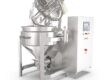


In the beauty and personal care industry, where consumer loyalty is won through product performance and sensory delight, the journey from raw formulation to finished cream, lotion, or serum is defined by a critical technological process: emulsification. An industrial cosmetic emulsifier is not merely a piece of mixing equipment; it is the fundamental engine that determines the stability, texture, efficacy, and shelf life of your final product. For brands and contract manufacturers aiming for market leadership, mastering this technology is the single most important step in ensuring consistent, superior quality and unlocking true innovation.
The Non-Negotiable Science: Why Precision Emulsification Matters
At its core, creating a cosmetic emulsion involves permanently blending immiscible phases—typically oil and water—into a single, stable system. This requires overcoming significant interfacial tension through the application of precise, high-shear energy. Inadequate emulsification is the root cause of most product failures, leading to:
- Physical Instability: Phase separation (creaming or oiling out), sedimentation, or graininess, rendering the product unsaleable.
- Compromised Sensory Attributes: A greasy, sticky, or uneven texture that fails to meet consumer expectations for luxury and performance.
- Reduced Bioavailability & Efficacy: Poor dispersion of active ingredients (vitamins, peptides, antioxidants) limits their delivery and effectiveness on the skin.
- Shortened Shelf Life: Unstable emulsions accelerate the chemical degradation of sensitive actives and preservatives.
Core Technologies Powering Modern Cosmetic Emulsifiers
Today’s advanced emulsifiers integrate multiple technologies to deliver flawless, reproducible results:
-
High-Shear Homogenization: The foundational mechanism. A high-speed rotor-stator generator or similar shear head creates intense mechanical and hydraulic shear forces, reducing oil droplets and solid particles to a uniform, sub-micron size (often 1-5 microns). This creates the smooth, stable base essential for all creams and lotions.
-
Vacuum Emulsification: A critical feature for premium products. Processing under vacuum removes entrapped air during homogenization. This eliminates microbubbles for a denser, richer texture, prevents oxidation of delicate ingredients (like Vitamin C or retinoids), and significantly extends product shelf life by inhibiting rancidity and color change.
-
Precise Thermal Management: Jacketed vessels with accurate heating and cooling systems allow for controlled melting of waxes and butters, safe incorporation of heat-sensitive actives, and rapid cooling to “set” the emulsion’s microstructure. This ensures optimal viscosity, stability, and ingredient potency.
-
Versatility for Complex Formulations: Modern systems are designed to handle the entire viscosity spectrum—from fluid micellar waters and serums to thick anhydrous balms and pigmented foundations. They excel at dispersing powders (e.g., TiO2, ZnO, mica), encapsulating fragrances, and uniformly distributing sensitive particles without degradation.
The Tangible Return on Investment: Business Benefits of Advanced Technology
Investing in a state-of-the-art emulsifier delivers measurable value across your entire operation:
- Superior Product Quality & Consumer Loyalty: Achieve consistently luxurious textures—lightweight, fast-absorbing, non-greasy—that exceed sensory benchmarks and build strong brand advocacy.
- Guaranteed Batch-to-Batch Consistency: Automated, programmable systems ensure every production run is an exact replica, protecting your brand’s reputation for reliability and eliminating costly quality deviations.
- Accelerated Innovation & R&D: Unlock the ability to develop and scale novel formulations, including water-in-silicone gels, oil-free serums, and products with high concentrations of unstable actives, that are impossible to create with basic equipment.
- Maximized Production Efficiency & Yield: Drastically reduce processing times from hours to minutes. Achieve perfect emulsions faster, increasing throughput, reducing energy costs, and minimizing product loss due to rework or batch failure.
- Enhanced Supply Chain Stability: Products with excellent physical and chemical stability have longer shelf lives, reducing waste in distribution and retail, and allowing for more flexible logistics.
Selecting Your Strategic Technology Partner: Key Decision Factors
Choosing the right emulsifier is a critical capital decision with long-term implications. Essential considerations include:
- Scalability & Flexibility: Does the supplier offer compatible systems from laboratory-scale (1-20L for R&D) to pilot and full-scale GMP production, ensuring seamless technology transfer?
- Hygienic Design & Compliance: Construction must be in 316L or higher-grade stainless steel, with electropolished surfaces, sanitary clamp connections, and full Clean-in-Place (CIP) / Sterilize-in-Place (SIP) capability to meet FDA, EU GMP, and ISO 22716 standards.
- Technical Expertise & Process Support: Partner with a manufacturer that provides deep application knowledge, assists with process optimization and scale-up, and offers reliable global after-sales service, including training and spare parts.
- Performance Validation: Seek suppliers who offer laboratory trial services, allowing you to test your specific formulations on their equipment with measurable results before making an investment.